
Gaining Tempo in Chess: How to Force Your Opponent to React
 Ankit Rajpara
Have you ever played a game where your opponent seemed to dictate every move while you spent the entire opening running away? Every move they played created a new problem, forcing you to put out fires instead of developing your own pieces.
When a game feels like this, you are experiencing the power of gaining tempo in chess.
Tempo is one of the fundamental concepts in chess strategy, yet it is frequently misunderstood by improving players. Many beginners believe gaining tempo simply means attacking an enemy piece to make it run away. However, the deeper reality of chess goes much further: a true tempo-gaining move improves your own position while simultaneously creating a threat your opponent cannot ignore.
What Does "Gaining Tempo" Mean in Chess?
In Italian, tempo means "time." Because players alternate moves, time in chess is measured in turns. Gaining a tempo means winning a turn or accelerating your plans at the expense of your opponent's setup.
To grasp the practical reality of tempo, compare these three types of moves:
A useful move: You develop a bishop to an active square. You improve your position, but your opponent is free to execute their own plan on their turn.
A forcing move: You give a check or attack a piece. Your opponent is legally or strategically forced to respond immediately, but you might not have improved your own position in the process.
A tempo-gaining move: You play a dual-purpose move. You improve a piece's placement or complete a key setup goal while making a threat that forces an immediate defensive reaction.
When you gain tempo, you effectively make progress for free because your opponent must spend their entire turn responding to your action rather than advancing their own board control.
Why Is Tempo Important in Chess?
Every chess player starts the game with equal access to time. However, White moves first, holding a micro-advantage in time. Gaining tempo allows you to alter this balance, dictating the flow of play.
Understanding the ripple effects of gaining tempo:
Accelerates development: You activate your pieces rapidly while your opponent spends turns retreating.
Seizes the initiative: You become the driver, dictating where the battle takes place while forcing your opponent into defense.
Creates continuous pressure: Unrelenting threats cause time pressure, fatigue, and tactical blunders from your opponent.
Prevents enemy plans: By keeping your opponent reactively defending, they never have time to execute their own strategy.
The Key Idea: Improve Your Position With a Threat
The core habit of intermediate players boils down to asking a single question before every move:
"Can I improve my position while creating a threat?"
Many beginners fall into the trap of playing single-purpose moves. They see an enemy piece, attack it, and watch it move away to a better square—without gaining any positional value themselves.
A true tempo-gaining move hits two targets at once:
1. Internal Goal: Improves piece placement, controls the center, opens lines, or completes development.
2. External Threat: Attacks a piece, creates a mating threat, or threatens a tactical fork.
By combining an internal improvement with an external threat, you achieve maximum efficiency in your game.
Practical Example: Gaining Multiple Tempos
Let’s look at a concrete example of how gaining tempo works in practice. In this opening sequence, White brings out the queen too early—a classic mistake that allows Black to launch a series of tempo-gaining moves.
Diagram 1: Gaining Tempo-1 Pic
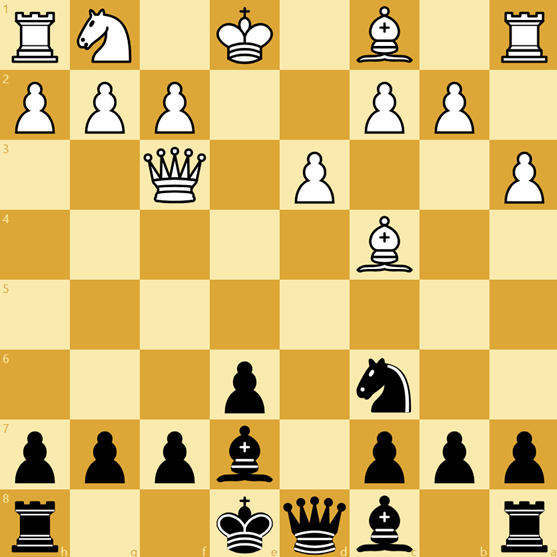
White's queen has ventured into the center of the board too early. While the queen is a powerful piece, it is vulnerable to attacks from lower-value pieces.
Diagram 2: Gaining Tempo-2 Pic
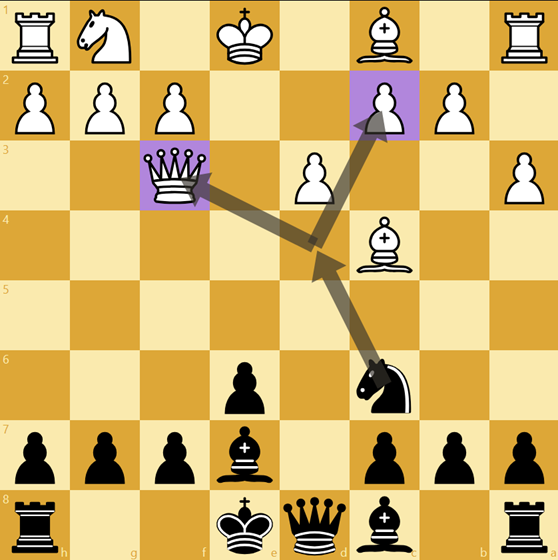
Black plays 1...Nd4!
What improved for Black? The knight centralizes to a monster square on d4, controlling key central squares.
What threat was created? The knight directly attacks White’s queen on h4 while simultaneously threatening a fork on c2 (forking the king and rook).
Why was White forced to respond? White cannot ignore a threat to their queen or a royal fork. White plays 2.Qd1, tucking the queen back home to cover c2.
Black improved a knight for free because White spent a turn retreating.
Diagram 3: Gaining Tempo-3 Pic
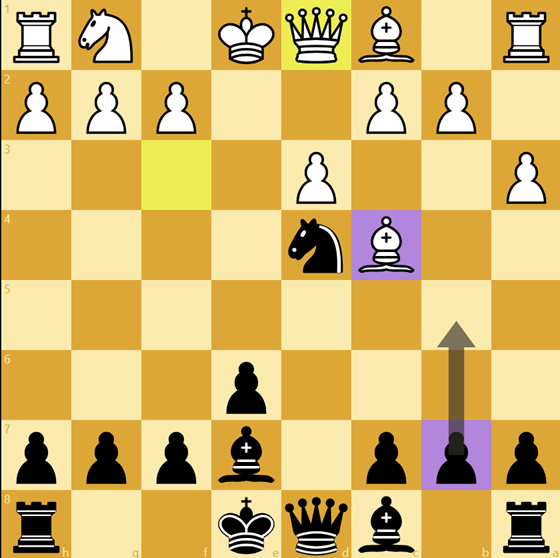
Instead of making a slow developmental move, Black plays 2...b5!
What improved for Black? Black expands on the queenside, grabs territory, and clears the b7-square for the light-squared bishop.
What threat was created? The b5-pawn directly attacks White’s bishop on c4.
Why was White forced to respond? White must address the attack on their bishop, spending another turn to move or save the piece.
Diagram 4: Gaining Tempo-4 Pic
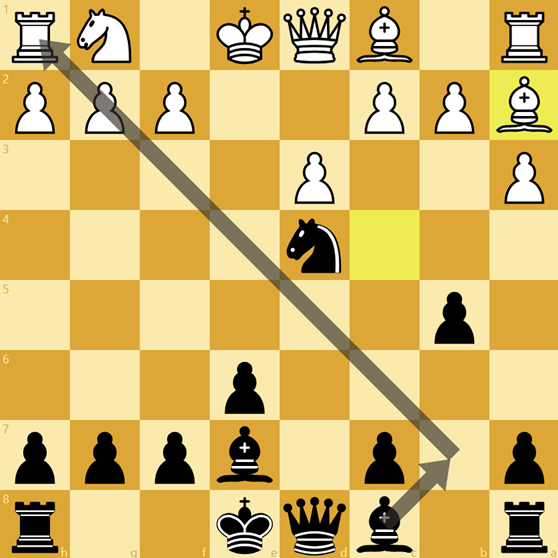
After White saves the bishop, Black plays 3...Bb7!
What improved for Black? The light-squared bishop arrives on its ideal long diagonal, completing a powerful fianchetto setup.
What threat was created? The bishop immediately targets White’s vulnerable g2-pawn.
Why was White forced to respond? White cannot lose the g2-pawn without ruining their king-side pawn structure and losing material, forcing yet another defensive move.
Over four moves, Black centralized a knight, expanded queenside territory, and developed a bishop to a dominant diagonal. White made virtually no progress, spending every single turn responding to Black's actions.
Summary: Master the Dual-Purpose Move
Gaining tempo in chess isn't about wild, aggressive attacks or hope-chess tactics. It's about maximizing efficiency and playing dual-purpose moves.
The next time you sit down at the chessboard, avoid single-minded development or empty threats. Train your brain to ask:
"Can I improve my position while creating a threat?"
Master this habit, and you'll seize the initiative, dictate the pace of your games, and force your opponents to react to you.
Suggested Related Reading
- Opposite-Side Castling: How to Win the Race to Attack — Learn how tempo dictates speed in opposite-side castling races.
- How to Defend When You're Losing the Attacking Race — How to deal with opponents who have seized the initiative through tempo.
- Why Development Matters and How to Use It with Purpose — Why development matters and how to use it with purpose.
- Provoking in Chess: Creating Weaknesses Before Building Pressure — How to create weaknesses in your opponent's territory.