
Opposite-Side Castling: How to Win the Race to Attack
 Ankit Rajpara
Opposite-side castling positions produce some of the most sharp, aggressive, and decisive games in chess. Unlike standard middle-game structures where both players maneuver carefully behind safe pawn shields, opposite-side castling changes strategic priorities entirely. Because the kings are settled on opposite wings, both players can attack simultaneously without weakening their own king's cover.
The position rapidly becomes a pure attacking race. Whoever opens lines against the opponent’s king first often seizes the initiative and wins the game. However, winning this race requires much more than simply pushing pawns as fast as possible. Understanding how to measure timing, evaluate counterplay, and control your opponent's fastest ideas is the true secret to mastering opposite-side castling attacks.
A single inaccurate move can completely change the course of the game, turning a promising attack into a difficult defence. So how can you decide when to attack and when to stop your opponent's counterplay first?
What Makes Opposite-Side Castling So Dangerous?
In positions where both kings are castled on the same wing, advancing your own pawns creates serious weaknesses around your king. In opposite-side castling, however, your pawns serve a dual purpose: they act as direct battering rams against the enemy king while your own king sits safely on the opposite side of the board.
This creates an attacking race in which several factors become especially important:
- Pawn storms: Pawn advances can open files and create attacking lines against the enemy king.
- Timing and tempo: A single move can determine which side creates dangerous threats first.
- Counterplay: Your opponent is usually launching an attack of their own, so ignoring their fastest idea can be dangerous.
- King safety: An attack is only successful if your own king can withstand the opponent's threats.
This means that simply attacking as quickly as possible is not always the best strategy. Before starting your own pawn storm, you need to understand what your opponent is trying to achieve.
How to Calculate the Attacking Race
When navigating an attacking race, you must learn how to accurately calculate who is faster. Instead of relying on general principles or impulse, ask yourself five practical questions before making a decision:
- What is my opponent's fastest attacking idea? Identify the exact plan they intend to execute.
- Which pawn break can they play? Figure out which pawn push will breach your king's pawn shield.
- How quickly can each side create threats? Count the exact number of moves (tempo) required for both attacks to break open lines.
- Is my king safe enough to continue attacking? Evaluate whether your king can survive the opponent's incoming threats.
- Do I need to stop my opponent first? Determine if a defensive or prophylactic move is required to slow down their momentum.
An Instructive Example
To see these principles in practice, let us examine an instructive middle-game scenario.
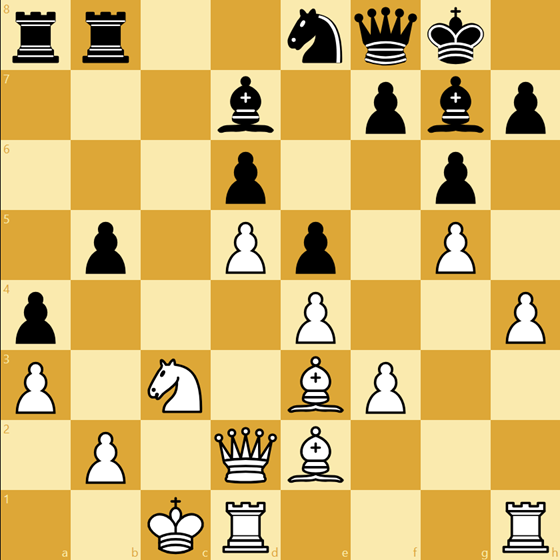
Both sides have clear attacking prospects. White can attack the black king on the kingside, while Black can create a queenside attack against the white king.
The important question is: should White immediately start the attack, or should White first deal with Black's counterplay?
Why h5? Is a Mistake
The most natural move, h5 , appears to be an effective way to start the attack against Black's king. However, playing it immediately is a mistake because it allows Black to execute a dangerous pawn break.
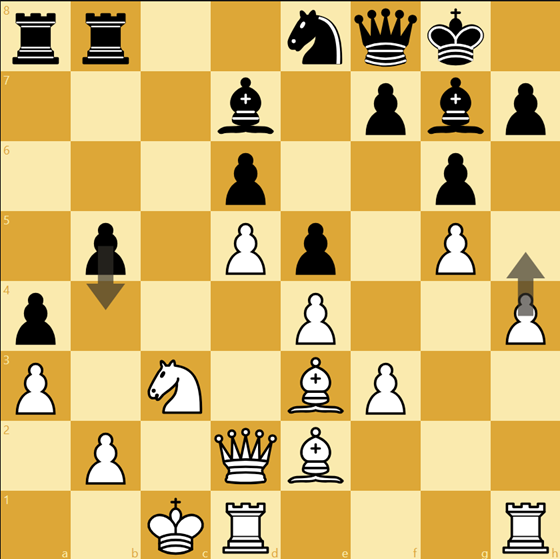
Black responds with b4!, and the queenside attack develops much faster than White's attack on the kingside.
This illustrates an important principle of opposite-side castling: playing as aggressively as possible is not always the right approach. Before launching your own attack, you must first understand your opponent's counterplay.
The Prophylactic Solution: Na2!
Instead of rushing the attack with h5, White should play the prophylactic knight move Na2!.
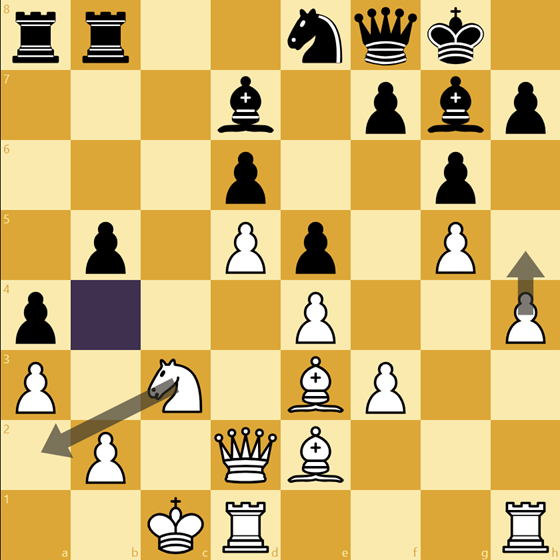
At first glance, moving the knight to a2 may appear passive, especially in a position where White wants to attack the black king. However, the move has a clear strategic purpose: it prevents Black's dangerous b4 pawn break.
This is the essence of prophylaxis: identifying your opponent's fastest, most dangerous counterplay and neutralizing it before continuing your own offensive operations. By playing Na2 , White takes control of the tempo, defuses Black's initiative, and maintains complete control over the game.
Attack After Neutralizing Counterplay
Once Black's counterplay has been neutralized, White can safely continue with h5 and begin attacking the black king.
Now, playing h5 is both safe and powerful. White can push pawns, open files against the black king, and coordinate pieces without the constant threat of a faster counter-attack on the queenside.
The difference between these two approaches highlights a fundamental lesson in chess strategy: blindly attacking often leads to failure, whereas removing your opponent's core counter-resource first ensures a safe and effective offensive.
Key Lessons from Opposite-Side Castling
The example above highlights several practical lessons that you can apply in your own games:
- Do not automatically launch a pawn storm. An aggressive-looking move can allow your opponent to attack even faster.
- Look for your opponent's fastest pawn break. Identify the move that could open lines around your king.
- Calculate the attacking race. Compare how quickly both sides can create serious threats.
- Keep king safety in mind. An attack is useless if your own king gets checkmated first.
- Neutralize dangerous counterplay. A prophylactic move can be more valuable than an immediate attacking move.
- Do not underestimate quiet moves. A move such as Na2 can completely change the dynamics of an attacking position.
Conclusion
Mastering opposite-side castling is not simply about playing the most aggressive move on every turn. Raw speed means very little if your opponent breaks open your king's defenses first.
Before launching your own attack, take time to analyze your opponent's options. Frequently, the most decisive attacking move is the one that first stops your opponent's attack cold.
If you'd like to explore this position move by move, along with the complete Grandmaster explanation, you can find the full interactive analysis on ChessNeurons.com.