
How to Defend when you’re losing the attacking race in chess
 Ankit Rajpara
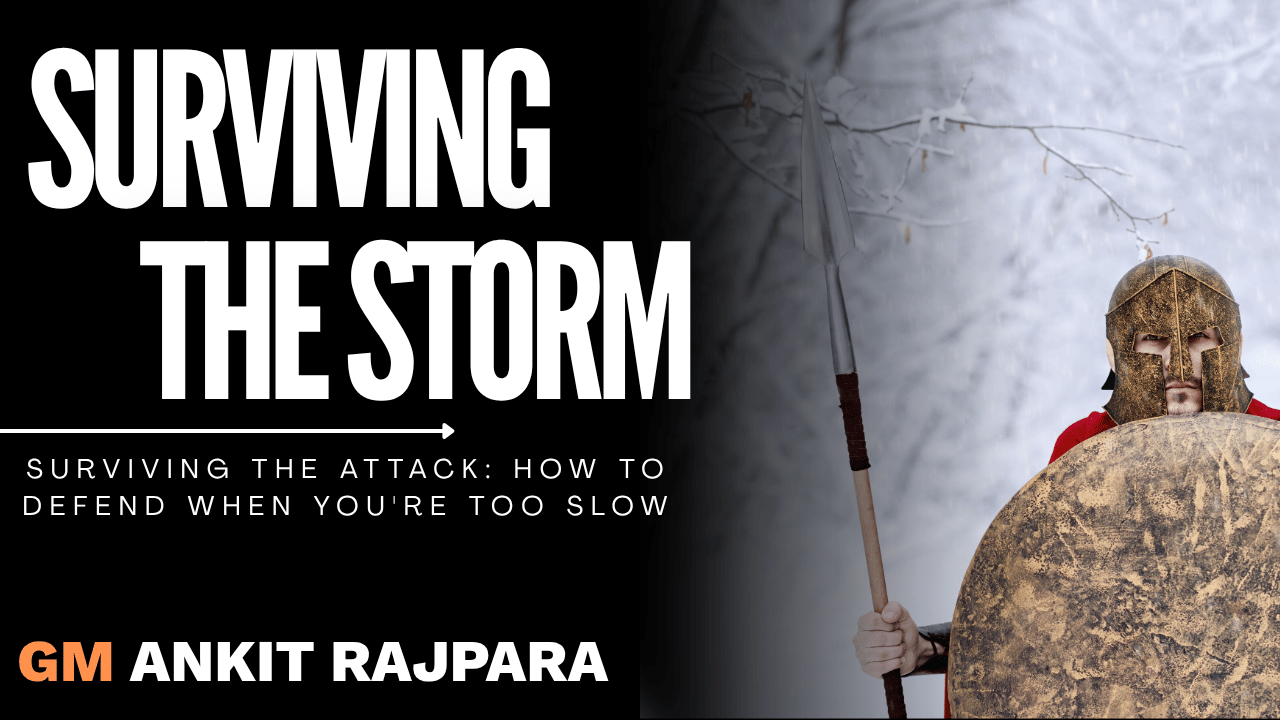
In an intense chess game—especially one with opposite-side castling—both players often launch pawn storms and piece maneuvers against each other's kings. Panic strikes when you realize your opponent's storm is crashing down while your own attack is several moves away from opening lines.
When you are losing the attacking race, you do not necessarily need to attack faster. Instead, you must pivot your strategy to disrupt your opponent's momentum, neutralize key threats, and shift the balance of the game.
1. Recognize When You Are Losing the Race
The first step in surviving an attack is recognizing that your opponent has taken the upper hand early enough to take action. Watch for these critical warning signs on the board:
Attacking Local Superiority: The opponent has brought more pieces near your king than you have defenders.
Faster Pawn Storm: Their pawns are already breaking open files near your king, while your pawns are still on their starting squares.
Forcing Threats: They are creating concrete, move-by-move threats (such as threats of checkmate or piece wins) that force you to react continuously.
Tempo Shortage: Your own attack requires three or four preparation moves, but the opponent threatens to break open your king's shelter in one or two.
2. Stop the Most Dangerous Threat First
Defending does not mean reacting blindly to every check or minor threat. Identify the exact line or piece that threatens your king's survival and address it directly.
Block Attacking Lines: Place a piece or pawn in front of an enemy rook or bishop to close open files and diagonals.
Control Entry Squares: Cover the squares through which your opponent's queen or knights plan to infiltrate your territory.
Create Escape Squares: Give your king room to step away from the edge of the board or out of a potential mating net.
3. Slow Down the Attack
Attacks rely on speed and continuous momentum. Gaining even a single defensive tempo can completely alter the evaluation of a position.
Blockade Pawn Breaks: Place a piece directly in front of an advancing enemy pawn to lock up the structure and prevent files from opening.
Use Forcing Moves: Give a check or create an immediate threat elsewhere that forces your opponent to pause their attack for one turn.
Restrict Key Attacking Pieces: Use your pawns and minor pieces to take away forward squares from enemy knights and bishops.
4. Trade the Right Pieces
Trading pieces is one of the most reliable ways to defuse an attack. However, exchanging randomly can sometimes weaken your defense; focus strictly on eliminating key offensive threats.
Trade Queens: Removing the queens almost always eliminates immediate checkmate threats and forces the game into an endgame.
Eliminate Key Attacker: If a specific knight or bishop is anchoring the opponent's assault, exchange your equal piece for it—even if it means trading an active defender.
Keep Defensive Pieces: Avoid trading away pieces that are actively guarding open files or weak points around your king.
5. Counterattack Instead of Just Sitting Back
Passive defense—simply moving pieces back to guard squares—often gives the attacker total freedom to optimize their forces. Active defense uses counterplay to force the attacker onto the defensive.
Target a high-value enemy piece or un-castled king to force them to spend a tempo responding.
Open a line in the center of the board, as a central counter-strike often neutralizes a flank attack.
Create concrete threats rather than speculative side-attacks.
6. Be Willing to Give Up Material for King Safety
Material advantage is useless if you get checkmated. Giving up a pawn or an exchange (a rook for a minor piece) is often a small price to pay to stop a decisive attack.
Sacrifice to Close Lines: Give up a pawn to keep a critical file closed around your king.
Sacrifice for Time: Return captured material to break the opponent's initiative and gain crucial defensive tempos.
Sacrifice to Remove an Attacker: Exchange a higher-value piece for a lower-value attacker if that piece is about to deliver a checkmate.
7. Know When to Abandon Your Own Attack
A common mistake players make is continuing an attack simply because they have already invested time and effort into it. Continuing a slower attack while your king is under direct fire will only accelerate your defeat.
Accept when your attack is too slow, pivot your pieces back toward your king, trade off your opponent’s key attackers, and focus entirely on consolidating your position.
8. Stay Calm Under Pressure
Defending requires emotional discipline and objective calculation. When under intense pressure:
Avoid Panic Moves: Do not make rapid pawn moves around your king out of panic, as these often create permanent weaknesses.
Calculate Forcing Lines First: Look at checks, captures, and direct threats before making a move.
Trust Defensive Resources: Modern chess engines show that most attacks can be defended with precise play; trust that defensive resources exist in your position.
9. From Survival to Counterplay
Once you neutralize the immediate threats, the nature of the game changes. Attackers often overextend their pawns or leave their own king exposed during an all-out assault.
As your position stabilizes, look for weak pawns left behind by the opponent’s pawn storm, activate your defensive pieces into central squares, and convert your successful defense into a counter-winning or comfortably drawable position.
10. A Practical Defensive Checklist
Keep this mental checklist in mind when you realize you are losing an attacking race:
What is my opponent’s immediate, most dangerous threat?
Which enemy piece is driving the attack, and can I trade or restrict it?
Can I block the advancing pawns or close open lines?
Do I have a forcing counter-threat in the center or on another wing?
Is giving up a pawn or exchange worth securing my king’s safety?
Should I stop my current attack and shift pieces back to defend?
Once the attack slows down, where can I target my opponent's overextended weaknesses?