
Zugzwang: When Any Move Makes Things Worse
 Ankit Rajpara
In chess, we are used to the idea that having more choices is a good thing. When a position gives you several useful moves, it usually feels comfortable.
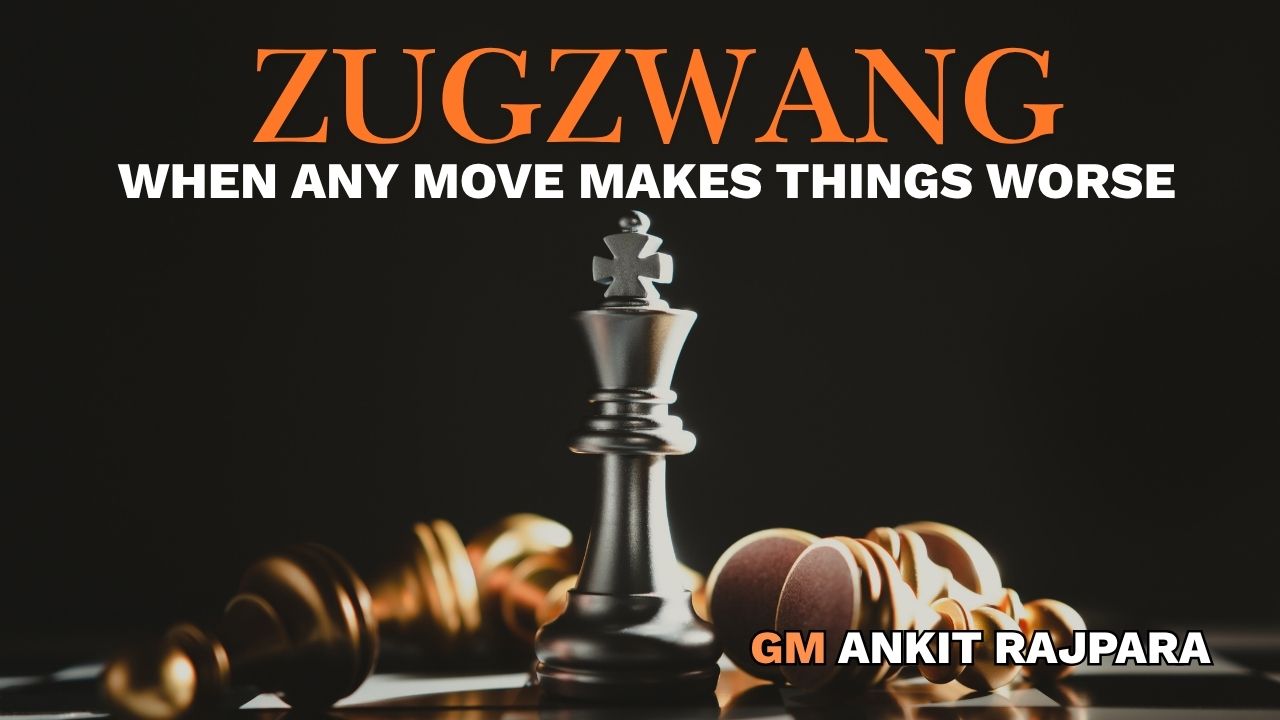
Zugzwang is almost the opposite. A player may have to move, but every available move makes the position worse. The problem is not finding a good move — it is that there may simply be no good move.
What Is Zugzwang?
The word zugzwang describes a situation in which the obligation to move becomes a disadvantage. If the same position could be passed and the player would be fine, but they are forced to make a move, that move can create a weakness, lose material, give up a key square, or allow the opponent to improve.
This idea appears most clearly in endgames, but the underlying principle is useful in many positions: sometimes the strongest move is to do nothing — except chess does not normally give you that option.
Why Zugzwang Happens
Zugzwang usually appears when a position is highly constrained. Pieces may have very few useful squares, pawn moves may create permanent weaknesses, or a king may be forced away from an important square.
A common example is a king-and-pawn ending. One king wants to maintain a key position, but moving the king can surrender an important square. A pawn move can be even more serious because it cannot be taken back.
The Key Question: What If I Could Pass?
One practical way to recognize zugzwang is to ask:
“If I could pass my move, would my position improve?”
If the answer is yes, look carefully at every legal move. The position may be approaching a zugzwang.
This question is especially useful in quiet endgames. Instead of searching immediately for an active idea, first check whether your opponent is running out of useful moves.
Not Every Difficult Position Is Zugzwang
It is important not to use the word too loosely. A position is not automatically zugzwang just because every move looks unpleasant.
The important feature is the obligation to move. If a player could keep the position unchanged and would be fine, but making a move forces a concession, the zugzwang idea becomes relevant.
How to Create Zugzwang
When you have the more comfortable position, look for ways to reduce your opponent’s useful choices.
1. Improve your pieces.
Put your king or pieces on useful squares while keeping your opponent restricted.
2. Control key squares.
A piece that takes away important escape or entry squares can make the opponent's remaining moves much harder.
3. Keep pawn moves in reserve.
Sometimes simply having fewer pawn moves means your opponent reaches the point where every move creates a weakness.
4. Avoid releasing the tension too early.
If the opponent is already restricted, do not automatically exchange pieces or make a pawn break that gives them freedom.
How to Defend Against Zugzwang
If you suspect that you are close to zugzwang, try to identify your most flexible moves before the position becomes critical.
King moves, pawn moves, and piece manoeuvres should be compared not only by what they do immediately, but by what they leave available for the next move. A move that preserves several options can be much more valuable than one that looks active.
In many endgames, reserve tempi are extremely important. A spare pawn move can effectively be kept in reserve and used when the opponent is the one who wants to pass.
A Practical Zugzwang Checklist
When a position feels unusually restricted, ask:
• Who benefits if neither side has to move?
• Which pieces have useful waiting moves?
• Which pawn moves create permanent weaknesses?
• Can I improve my position while taking away my opponent’s useful squares?
The more restricted the position becomes, the more important these questions are.
The Bigger Positional Idea
Zugzwang teaches an important lesson about chess: activity is not always the goal. Sometimes the goal is to make the opponent’s position so restricted that they are forced to damage it themselves.
Learning to recognize these moments can improve your endgame technique and also your general positional understanding. Instead of always asking, “What can I do?”, you begin asking, “What can my opponent still do?”
If you’d like to explore more positional ideas and practical chess concepts, you can find grandmaster-curated training and explanations on ChessNeurons.