
Prophylaxis in Chess: How to Think About Your Opponent's Plan
 Ankit Rajpara
One of the most important aspects of positional chess is not just finding your own plans, but understanding your opponent’s intentions as well.
Many times during a game, players naturally focus on questions like:
How can I improve my position?
What should my plan be?
How can I create active play?
But another equally important question is:
“What does my opponent want?”
This way of thinking is called prophylactic thinking.
What Is Prophylactic Thinking?
Prophylaxis means taking your opponent’s ideas into account before carrying out your own plan. Instead of immediately asking what you want to do, you first consider what your opponent might do if you give them the opportunity.
This does not mean that you should constantly play defensive moves. Rather, the idea is to prevent or restrict your opponent’s most useful plans while continuing to improve your own position.
Let me show you a position. It’s White to play here.
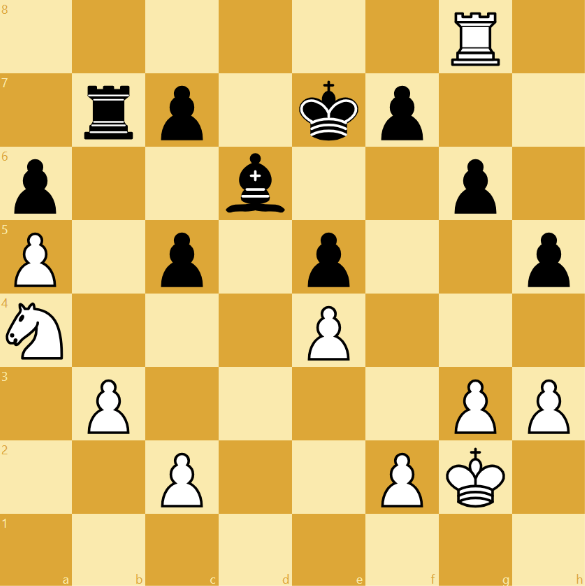
White is better due to black’s weak pawn structure on the queenside, the restricted bishop, and the active rook and knight. In such positions, it is very natural to think actively and go for ideas like Ra8 to attack the a6 pawn.
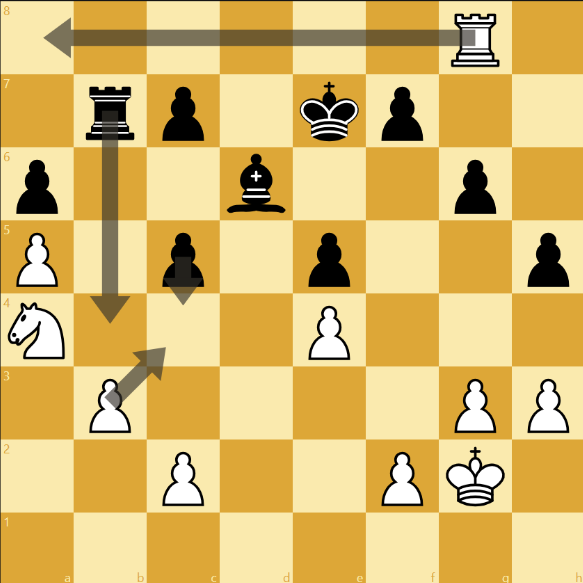
However, there is an important detail. After Ra8, Black can respond with c4, and after bxc4 Rb4, Black suddenly gets active counterplay on the queenside.
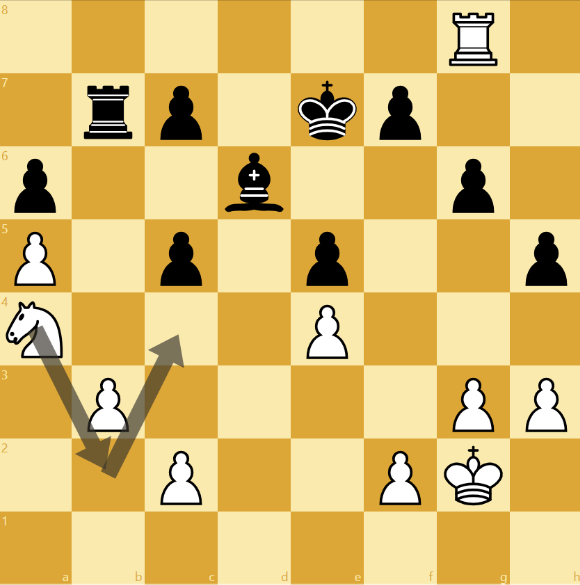
This is where prophylactic thinking becomes important.
Instead of rushing with Ra8 immediately, White can first play Nb2, preventing Black’s c4 idea and preparing Nc4 next. This move limits the opponent’s activity before continuing with White’s own plans.
Only after restricting Black’s counterplay can White continue improving the position with ideas like attacking the a6 pawn or expanding on the kingside with moves such as Kf3, Ke3, and f4. White remains clearly better.
A Practical Way to Think About Prophylaxis
When you reach a position where you are considering your next move, try adding one question to your usual thought process:
“If I make my intended move, what does my opponent want to do next?”
You can break this down into three simple questions:
1. What is my opponent's most active idea?
2. Can they create counterplay against my position?
3. Can I prevent that idea while improving my own position?
This approach can help you avoid playing a good-looking move that accidentally gives your opponent exactly the activity they are looking for.
The strongest prophylactic moves are often not dramatic. A move that prevents a pawn break, takes away an active square, or stops a useful piece manoeuvre can completely change the character of a position.
Restrict First, Improve Second
Very often in positional chess, preventing the opponent’s activity is just as important as creating your own.
A strong position does not always need to be converted immediately through an active plan. Sometimes the best approach is to first remove your opponent’s source of counterplay and then continue improving your own position.
This is one of the key differences between simply having a plan and understanding the position as a whole.
If you'd like to explore this position move by move, along with the complete grandmaster explanation, you can find the full interactive analysis on ChessNeurons